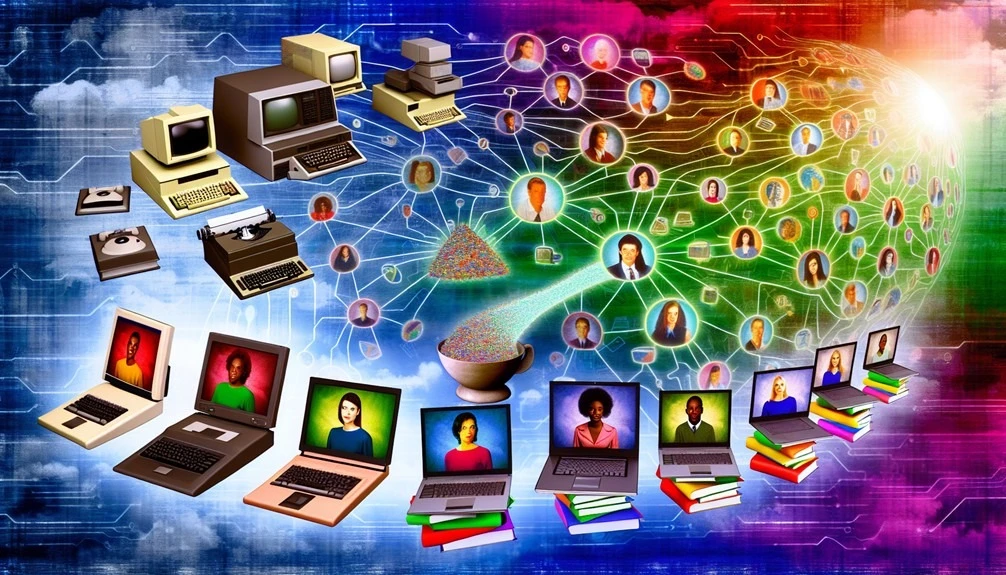
Imagine stepping into a classroom where the walls stretch infinitely, filled with resources from around the globe—this is what online learning in higher education has become. You've likely seen the transformation from simple email exchanges to sophisticated Learning Management Systems that engage and connect students. Yet, as the COVID-19 pandemic accelerated this evolution, it also raised questions about the future of education. What does this mean for the way you'll learn, interact, and grow in your academic journey? The answers might surprise you.
Early Beginnings of Online Learning
In the early days of online learning, the landscape of education began to shift dramatically as technology emerged as a pivotal force. You might recall how traditional classrooms, once the sole bastions of knowledge, started to incorporate digital tools. The internet opened doors to new forms of engagement, allowing you to access course materials from anywhere, breaking geographical barriers.
These initial forays into online education, much like today's online school K-12 systems, were marked by asynchronous learning models, where you could learn at your own pace. Early platforms often relied on simple email correspondence and bulletin boards to facilitate discussion, offering you flexibility that brick-and-mortar institutions couldn't.
However, this also posed challenges, like the need for self-discipline and time management skills.
As you navigated these early online courses, you experienced a blend of excitement and uncertainty. The potential for personalized learning and immediate access to vast resources was a game-changer. Yet, the technology was still evolving, and many institutions struggled to adapt.
Nonetheless, this period laid the groundwork for a more inclusive and accessible educational environment, paving the way for future innovations in online learning.
The Rise of Learning Management Systems
As online learning gained traction, the development of Learning Management Systems (LMS) revolutionized how you interact with educational content. These platforms streamlined the educational experience, making it easier for you to access resources, engage with peers, and track your progress.
With the rise of LMS, you can enjoy a more structured approach to learning.
Consider the benefits these systems bring to your education:
- Centralized Resources: All your course materials, from lectures to readings, are stored in one place, simplifying your study process.
- Interactive Tools: Features like discussion boards, quizzes, and multimedia content engage you actively, enhancing comprehension and retention.
- Progress Tracking: LMS allow you to monitor your achievements, helping you stay motivated and focused on your goals.
These systems not only cater to your individual learning style but also foster collaboration among students and instructors.
As you navigate through various LMS, you'll find that they're designed to facilitate a more personalized and efficient learning experience, ultimately transforming how education is delivered in higher education.
Impact of the Internet and Technology
The digital landscape has fundamentally reshaped higher education, creating unprecedented opportunities and challenges for both students and educators. You've likely experienced this shift first-hand, as the internet and technology have opened doors to a wealth of resources and learning modalities. Online courses, webinars, and interactive simulations provide you with flexible options that traditional classrooms can't match.
However, this abundance of information can also overwhelm you. Distinguishing credible sources from misinformation requires critical thinking skills that are more essential than ever. You must navigate a sea of online content while developing digital literacy to enhance your learning experience.
Moreover, technology has fostered a global learning community. You can connect with peers and experts from around the world, gaining diverse perspectives that enrich your education. Yet, this connectedness comes with challenges, like digital equity and access disparities. Not everyone has the same level of access to technology, which can create gaps in learning opportunities.
In this evolving landscape, your adaptability is key. Embracing technology not only enhances your educational experience but also prepares you for a workforce increasingly reliant on digital skills.
The Role of COVID-19
COVID-19 dramatically accelerated the shift toward online learning in higher education, forcing institutions to adapt rapidly to a virtual environment. You witnessed firsthand how colleges and universities scrambled to convert their courses online, sometimes within mere days. This unprecedented crisis revealed both challenges and opportunities in the educational landscape.
Consider three significant changes you may have experienced:
- Increased Accessibility: Students from various backgrounds found new ways to engage with course materials, breaking geographical barriers.
- Enhanced Technology Integration: Educators adopted tools like Zoom, Google Classroom, and other platforms, reshaping how lessons were delivered and interacted with.
- Flexible Learning Environments: You likely noticed a change toward asynchronous learning, allowing you to balance education with personal responsibilities more effectively.
These elements not only transformed the way you learned but also highlighted the need for institutions to rethink their approaches to education.
As a result, you may have developed new skills in self-directed learning and time management, shaping your educational experience in ways you hadn't anticipated. The pandemic's impact on online learning is profound, and it's clear that some of these changes will be lasting.
Innovations in Online Pedagogy
With the rapid shift to online learning, educators began exploring innovative pedagogical strategies to enhance engagement and effectiveness. One significant approach is the use of interactive multimedia, which transforms traditional lectures into dynamic learning experiences. By incorporating videos, podcasts, and infographics, you can cater to different learning styles, making the material more accessible and engaging.
Another innovation is the integration of collaborative tools. Platforms like discussion boards and group projects encourage peer interaction, fostering a sense of community that can sometimes be lacking in online environments. This not only enhances learning but also builds essential teamwork skills.
Moreover, adaptive learning technologies have emerged, allowing for personalized learning experiences. These systems analyze individual performance and tailor content to meet your specific needs, ensuring you grasp concepts at your own pace.
Finally, gamification techniques, such as leaderboards and badges, motivate you to participate actively in your learning journey. By incorporating elements of play, these strategies make the learning process enjoyable and competitive.
These innovations in online pedagogy are reshaping how you learn, making education more engaging, personalized, and effective than ever before.
Future Trends in Online Education
Evolving landscapes in online education signal a transformative future where flexibility and personalization take center stage.
As you navigate this new terrain, you'll likely encounter several trends reshaping the way you learn and engage with content. Here are three key trends to watch for:
- AI-Powered Learning Assistants: Imagine having an AI tutor available 24/7, adapting to your needs and providing personalized feedback on assignments. This technology will make learning more interactive and tailored to your pace.
- Micro-Credentials and Modular Learning: You'll find that education is shifting toward shorter, focused courses that allow you to earn micro-credentials. This approach enables you to build skills incrementally, making education more accessible and aligned with job market demands.
- Virtual Reality (VR) and Augmented Reality (AR): Picture yourself immersed in a virtual classroom, interacting with 3D models or participating in simulations that bring abstract concepts to life.
These technologies will enhance experiential learning, fostering deeper understanding.
As these trends evolve, you'll experience a more dynamic and personalized online education journey, preparing you for the challenges of tomorrow's workforce.
Conclusion
As you navigate the ever-evolving landscape of online learning, remember it's like riding a wave—constantly shifting, yet full of potential. The journey from early digital tools to sophisticated LMS platforms has changed how education unfolds, especially in the wake of the pandemic. Embracing future trends means opening doors to personalized learning and skill development that cater to your unique needs. So, gear up; the future of online education is not just bright—it's dazzlingly transformative.